
4: Programming Notes
Plus: online vanishing acts, recent work, and more.

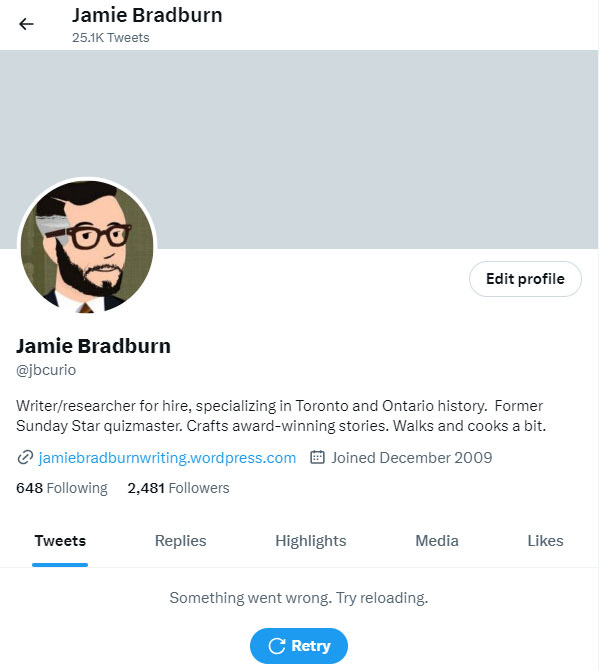
I have a love/hate relationship with social media. It can be a great medium for quick creative thoughts, keeping updated on how friends are doing, staying atop breaking news, promoting my work, learning more about projects, philosophies, and other facets of my professional fields, and finding new work opportunities. It can also be a cesspool of the worst of humanity, inane content, a distraction from other things I should be doing, and fall prey to the whims of platform owners. Sometimes I fully embrace social media, other times I draft posts stating the reasons why I’m about to leave a particular platform (think one whose name begins with f and ends with k).
My relationship with Twitter has been decent. Through careful curation of who I followed, frequent use of the mute button, and plug-ins which eliminated unnecessary noise, I avoided the worst the platform had to offer. There were many times I figured articles I wrote would attract the trolls, but that rarely happened. Sadly, one reason I might have been spared the worst of the worst was due to my status as a white male—the insults and threats thrown at peers who are anything else are horrifying and demonstrate just how some people rejoice in being awful specimens of humanity blinded by ideology/misogyny/pick-any-random-phobia.
I’ve tried to create a comfortable, non-threatening environment on my feed. At times, especially when posting “Twitter walks” around the city or taking my porcupine research assistants Qwilly and Qwillamina on adventures, I’ve aimed to present a lighter tone. These have often been therapeutic, especially during those times when everyone else is screaming how awful life is.
Even since Elon Musk bought Twitter, things have been going downhill in terms of platform stability. Today might be one of my last straws, thanks to limit of how many posts can be viewed in a day if you’re an average user, which effectively renders Twitter useless. I’ll watch what happens to see if this another temporary blip or if it’s time to get out the Donald Clamp end-of-civilization tape from Gremlins 2.

If this is the end of Twitter, it’s time to consider alternatives. I’ve tried Mastodon, but it still feels clunky. As much as I don’t like Facebook and its horrible algorithms, I have launched a professional page where people can keep track of my work. The “Twitter Walks” may become a feature on my Tales of Toronto site or appear on Instagram. I might even revive the blog I started 20 years which has hibernated in recent years. I may miss the instant ability to post and react, but taking time to craft posts on other platforms may be better in the long run. Any suggestions are appreciated.
***
Which brings me to something that vanished over the past few weeks: the online archive of Torontoist. If you visit the website, this message appears, advocating violence against nerds.
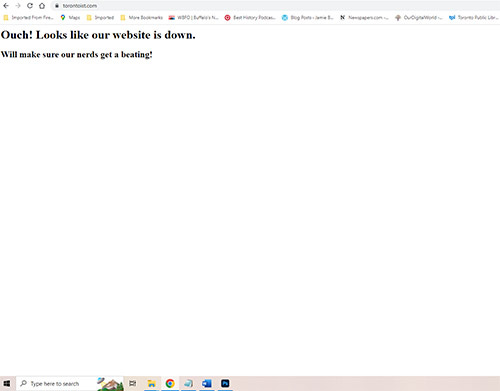
It’s supposed to be humorous but comes off as insulting.
Given it’s been down for awhile, and the current owners of the archive likely have little incentive to put it back up, I think it’s a safe bet that Torontoist will now live on via the Internet Archive’s Wayback Machine. Which is fine but awkward.
This means that a lot of great work, including 10 years worth of material from yours truly, now requires extra effort to retrieve. It’s another reminder that anything published on the internet risks a short lifespan through neglect, mergers, the cost of keeping servers going, and/or periodic changing of web addresses (looking at you, CBC Archives and Government of Canada).
After Torontoist was sold, I launched Tales of Toronto to keep most of the material I wrote for them alive, even updated. There were pieces I kept aside in case I ever pitched a book containing them – there was a point where the editors shopped around a book of Historicist columns but I heard they were told by some publishers that nobody would want to buy material they could find for free online (a view that’s shortsighted given how fast work disappears).
Among the pieces I reserved was a series of columns spotlighting the story of defunct Toronto newspapers. Publications like the Empire, the Mail, the News, and the World. I didn’t get around to every paper I wanted to cover, but I felt I provided a good survey of those that battled for readers between the 1870s and 1930s. I’m still contemplating using these pieces as the spine for a full-length book on that era of Toronto journalism, or stretching it to the demise of the Telegram in 1971, and have even plotted rough outlines with friends. If you think this is project worth pursuing and pitching, let me know.
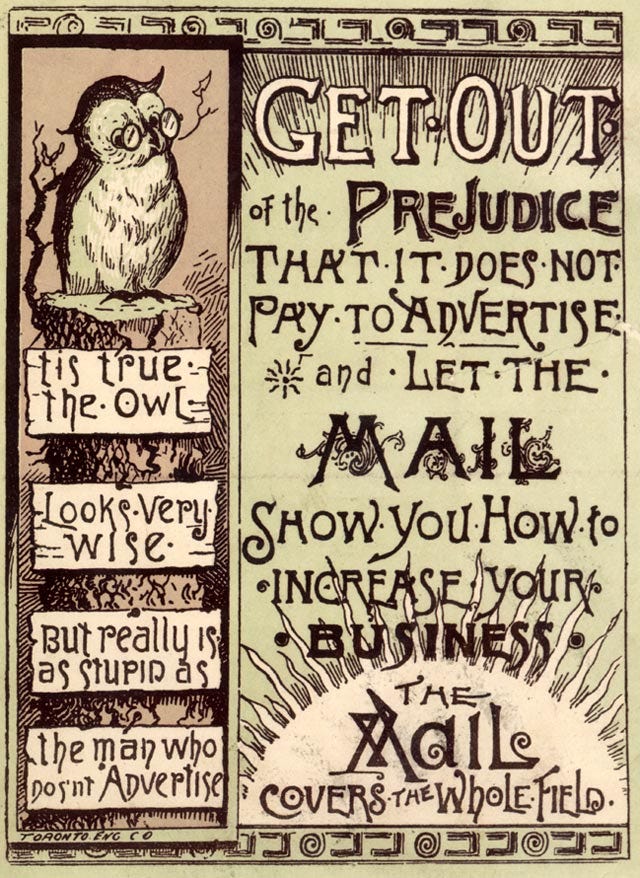
Advertisement for the Mail, 1890s. Toronto Public Library.
In the meantime, with recent cutbacks to Canadian media outlets and rumblings of a potential merger of Postmedia and the Toronto Star, it feels like the right time to bring these stories out of hibernation. Every Saturday for the next seven weeks I’ll be revisiting these papers and the personalities who shaped them, starting with the saga of the Mail, the forgotten half of the Globe and Mail’s masthead.
Recent Work
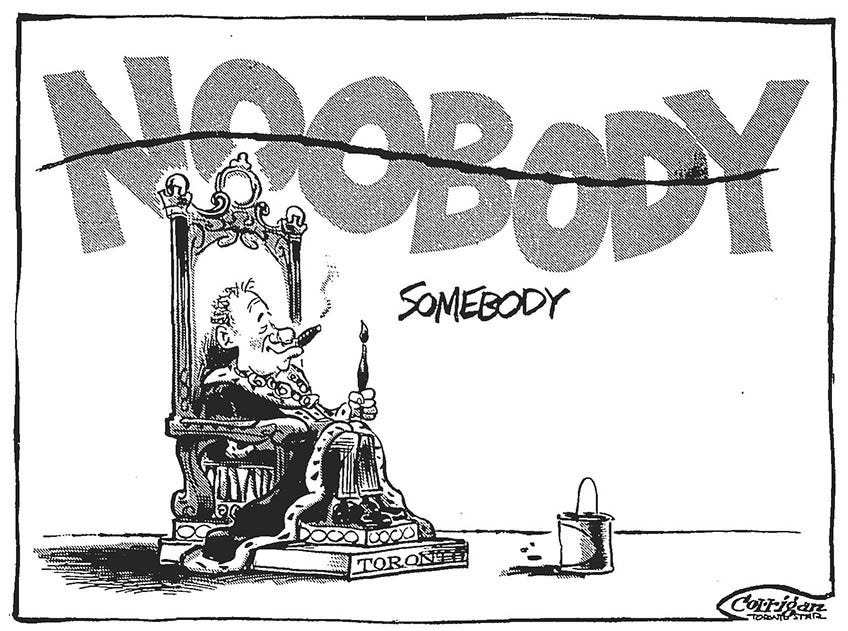
Toronto Star, November 11, 1997.
A trio of stories for TVO this time out. First up, a look at the 1997 municipal election in Toronto, where Barbara Hall and Mel Lastman fought to become the first mayor of the new megacity. Let’s say Mel’s talent for sticking his foot in his mouth nearly undid him after starting with a wide lead in the polls.
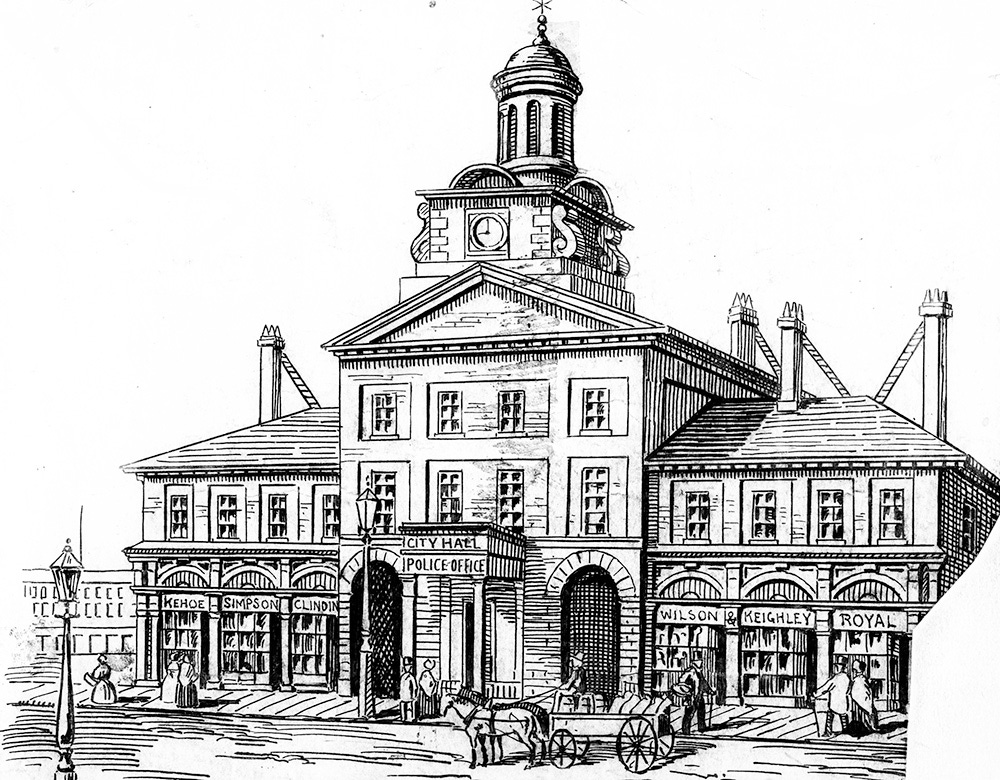
Sketch of Toronto City Hall as it would have appeared around 1856. This building now forms part of St. Lawrence Market's main hall. Illustration credited to C.W. Jefferys. (Toronto Public Library, B1-27C)
Sticking with politics, I also looked at how the process of choosing Toronto’s mayor evolved during the 19th century, which ranged from a council vote to public nomination meetings at the start of the campaign. Guest starring the old “Rebel Mayor” William Lyon Mackenzie and Ernest Macdonald, the only mayor that we’re aware of who died of complications from syphillis (he was a character…).
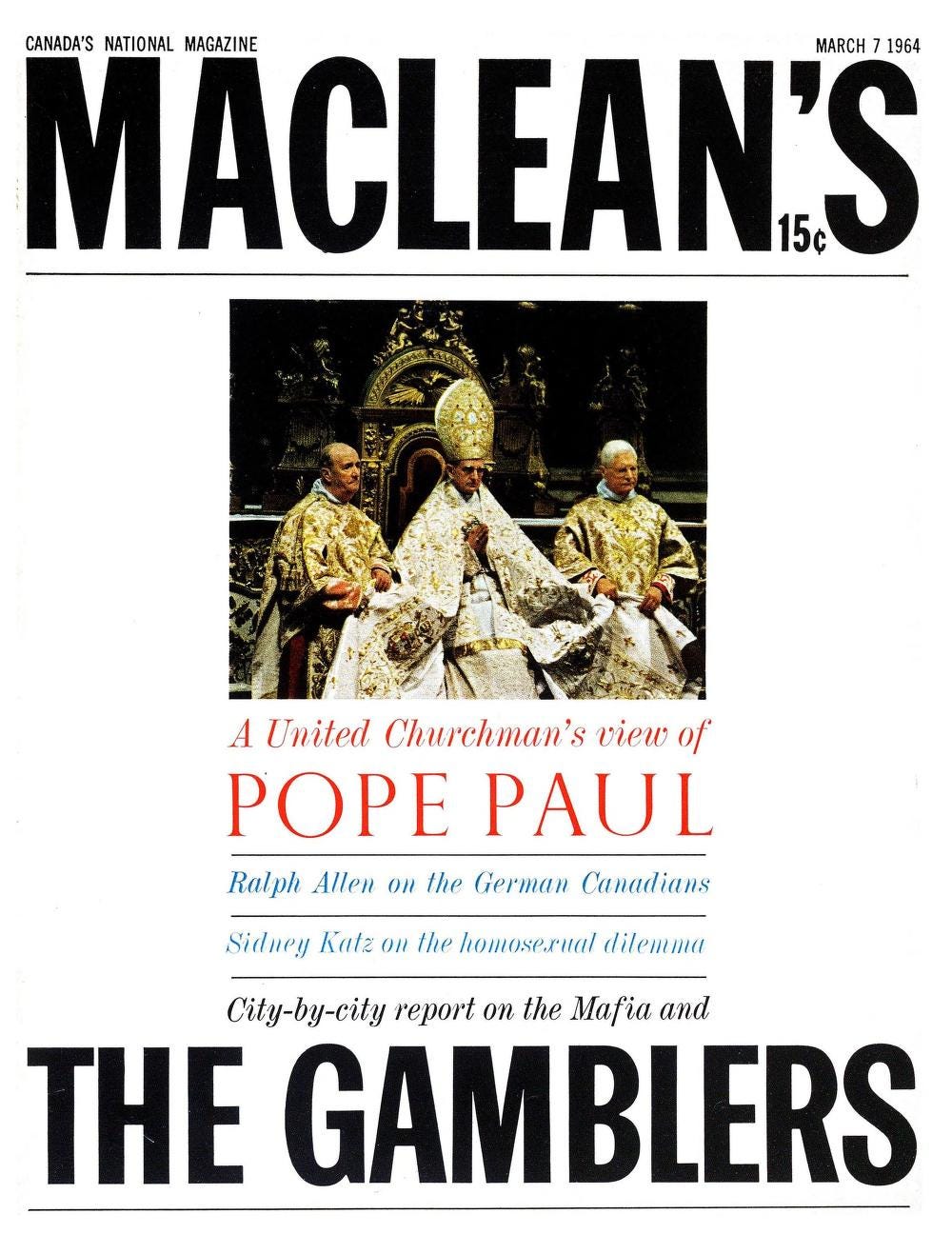
Finally, to mark Pride, I looked at a groundbreaking pair of articles published in Maclean’s in 1964 which presented an unusual-for-the-time balanced look at homosexuality in Canada, whose sources included activist Jim Egan.
In The Works
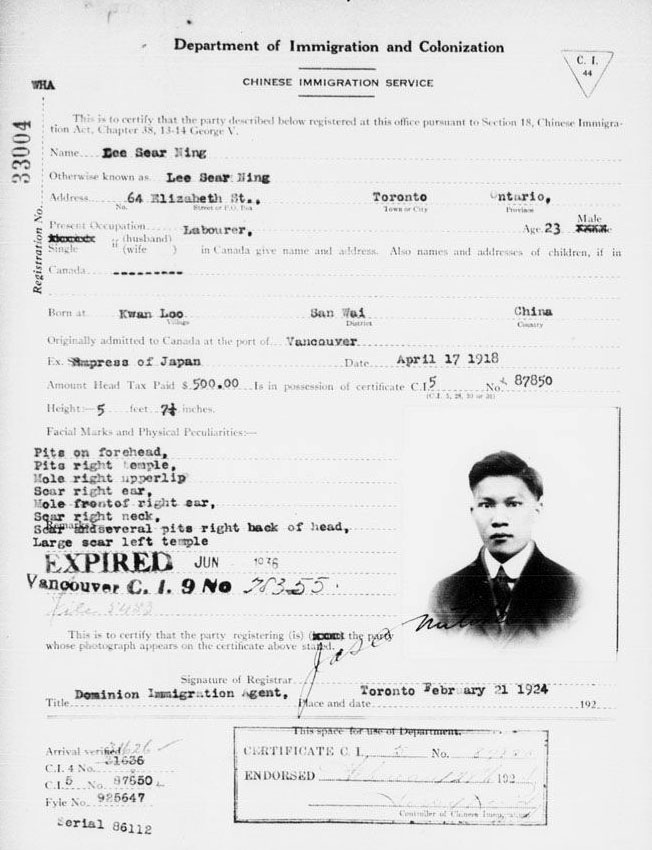
The timing of Olivia Chow’s victory in Toronto’s mayoral by-election is poignant, happening the same week as the 100th anniversary of the enforcement of the Chinese Immigration Act of 1923. One of the vilest laws ever to be enforced in Canada, the act became known as the “Chinese Exclusion Act” due to its effective banning of Chinese immigration to Canada in ways not applied to other ethnic groups. Look for a piece on the act in the near future.
Curio Collection

Speaking of Toronto’s new mayor, here’s a profile from the November 2, 1985 Toronto Star of Olivia Chow’s first political race, running for public school board trustee in a downtown Toronto ward. She received the highest vote of any of the three candidates, while the “woman against party politics,” Ene Martens, finished last.
Hire Me

Looking for a writer/researcher/editor for your latest project? I am currently taking on new work. Beyond my historical niche, which often leads in surprising directions, I’m looking to expand my horizons and explore new ways to utilize my skills. I am interested in working on general projects in the corporate, educational, and non-profit sectors where clear communication is a must. Privately message me at jamiebradburnwriting[AT]gmail.com if I can assist you.
***
That’s it for this edition - see you next time, when I promise to talk about something other than social media!
after being canned from Treehugger i have found that substack is keeping me busy and might make me a living when I flip the switch to paid. This might work.